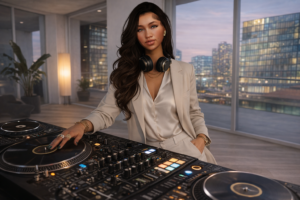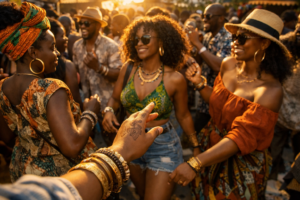
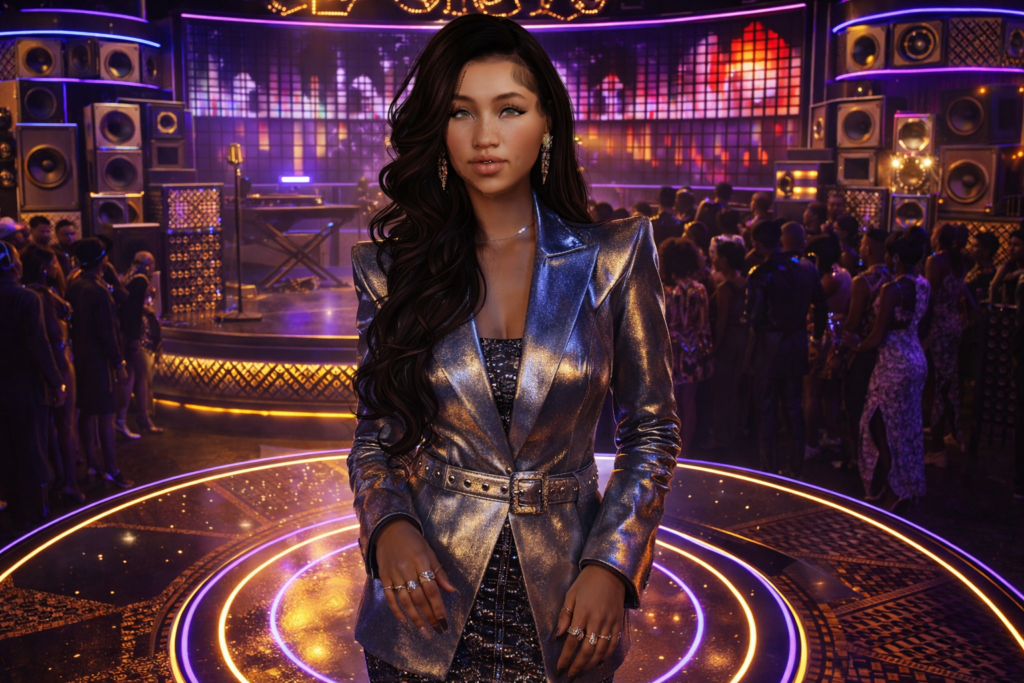
There is something funny about the way people talk about AI and music, as though Black music is supposed to be afraid of technology now.
Afraid of the machine? Since when?
Black music has been in conversation with machines for a long time, and not by accident. Some of the most important sounds of the last fifty years came from artists who knew how to use technology not as a crutch, but as texture, extension, attitude, and world-building. Drum machines did not kill groove. Synths did not kill feeling. Samplers did not kill originality. They expanded the vocabulary.
What some people call artificial, Black music has often turned into signature.
That is why the hand-wringing around AI-generated music feels a little selective to me. We already live inside the legacy of innovation. We have danced to it, slow-dragged to it, rode through neighborhoods with it shaking the speakers, cried to it, prayed through it, worked out to it, cleaned the house to it, and built whole identities around it. From funk futurism to hip-hop production to electronic R&B to dance music built for liberation after dark, technology has never been the enemy by default.
The real question has always been: who is using it, and what are they doing with it?
That is still the right question now.
When artists use AI-assisted tools with purpose, they are doing something deeply familiar. They are experimenting. They are reaching for sounds they may not have had the budget, training, studio access, or time to get another way. They are drafting ideas faster. They are building demos, shaping harmonies, testing arrangements, chasing moods before the inspiration fades. None of that cancels musicianship. It is often what allows the musicianship to get on the page in the first place.
And that matters because talent does not always arrive with resources.
A lot of Black creativity has always had to survive around gatekeepers, not because the ideas were weak, but because the doors were narrow. So when a new tool lowers barriers for the independent artist, the home producer, the late-blooming songwriter, the auntie with the church-trained ear and no formal recording budget, I am not inclined to dismiss it. I am inclined to pay attention.
There is also something culturally honest about embracing AI-assisted music without acting like every use of it is genius. Some of it will be lazy. Some of it will be corny. Some of it will feel hollow, derivative, or overly polished in that dead-eyed way modern tech sometimes does. Fine. So does plenty of human-made music. Bad taste did not begin with AI.
What Black listeners have always prized is not purity. It is feel.
Can the record hold the room? Can it move the body? Can it carry grief, seduction, testimony, swagger, yearning, release? Does it sound lived in? Those are human questions, and they do not disappear because software got smarter.
If anything, the pressure rises. When more people have access to powerful tools, taste becomes even more important. Vision becomes more important. Editing becomes more important. The artist has to know what deserves to stay and what needs to be cut. They have to know when the machine has done enough and when the human being has to step back in and put the breath back into the record.
That is not a weakness in AI-assisted creation. That is the point of it.
Black music has never survived by being scared of what is next. It survives because it knows how to touch the future without losing the pulse. That is the tradition. Not nostalgia for old tools. Not panic about new ones. Just the ongoing discipline of making technology answer to the groove.
And when that happens, the machine does not erase us.
It amplifies what was already there.